


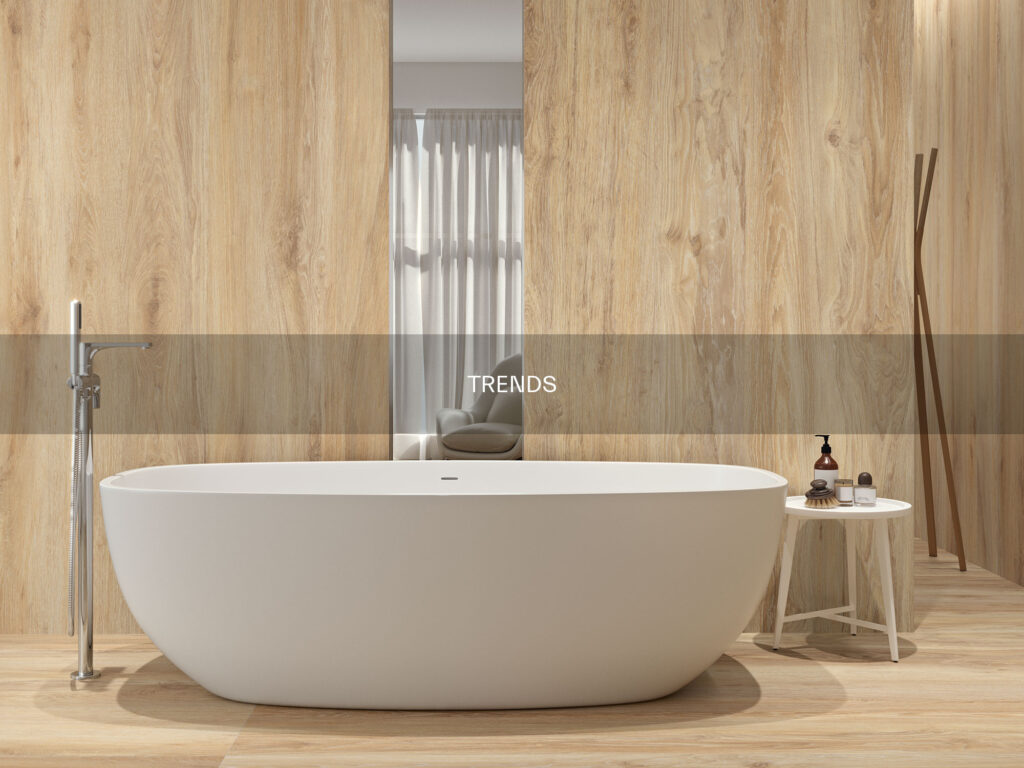
Natural wood is a material that brings warmth and elegance to any space, but it is not always the most practical option due to its maintenance requirements and sensitivity to humidity. Fortunately, wood look ceramic has become an ideal alternative for those who seek the charm of wood with the resistance and durability of ceramic. Below, we present the properties and benefits that wood look tile provides when used on walls.
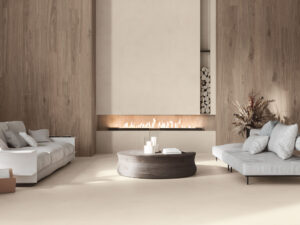
Sequoya
One of the main benefits of wood look tile is its ability to regulate room temperature. Unlike natural wood, which can expand or contract with temperature and humidity changes, ceramic maintains its stability and contributes to home thermal insulation. In warm climates, its cool surface helps keep spaces pleasant, while in winter, it can better retain heat when combined with a radiant heating system.
Additionally, installing wood look tile on walls can enhance a home’s thermal performance without requiring major structural changes. This is especially useful in modern constructions where energy efficiency is a priority. It helps reduce the use of heating and cooling systems, leading to lower energy consumption and, consequently, long-term economic savings.
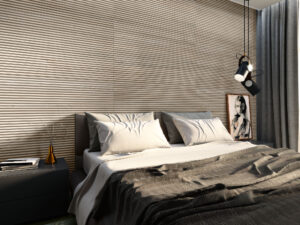
Foresta
Another key aspect is its ability to improve a room’s acoustic comfort. While natural wood has sound-absorbing properties, ceramic also helps reduce sound propagation, especially when installed with appropriate adhesives and insulating materials. This makes it an excellent choice for bedrooms, living rooms, or even commercial spaces where a quieter and cozier atmosphere is desired.
Ambient noise can be a determining factor in home quality of life. In urban areas or buildings with thin walls, wood look tile on walls can be an effective solution to minimize disturbances caused by traffic, external conversations, or household appliances. Installing it on strategic walls can create a more peaceful and comfortable environment without compromising the space’s aesthetics.
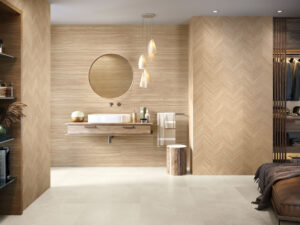
Larchwood
The visual appeal of wood look tile on walls is undeniable. Thanks to advances in digital printing technology, it is now possible to find designs that faithfully mimic the texture, grain, and colors of various wood types, from oak to walnut. Unlike real wood, it does not require varnishing, sanding, or special treatments to prevent pests or moisture. Its easy cleaning with water and soap makes it ideal for bathrooms, kitchens, and high-traffic areas.
Additionally, its durability ensures that its appearance remains intact over time, something that does not always happen with wood, which can wear out, fade, or warp due to constant exposure to sunlight, humidity, or frequent use. This makes ceramic a cost-effective option for those who want an elegant finish without worrying about ongoing maintenance.
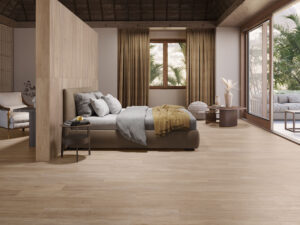
Vermont
Beyond its functional advantages, wood look tile on walls is a sustainable option, as it prevents tree cutting and is often made from recycled materials. Available in a wide variety of formats and finishes, it allows for the creation of rustic or modern environments, adapting to any decorative style.
Sustainability is a key factor in choosing home materials. The ceramic industry has made significant progress in the production of eco-friendly materials, using processes that minimize environmental impact. By choosing wood look ceramic on walls, you contribute to reducing the consumption of natural resources and promoting the use of recyclable products.
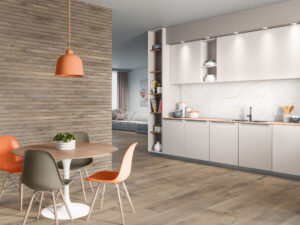
Northwood
Wood look tile on walls has become a trend in interior design, thanks to its ability to adapt to different spaces and styles. In the living room, for example, using it on a feature wall can create an elegant and welcoming focal point. In bedrooms, it brings a sense of warmth without the drawbacks of real wood, while in kitchens and bathrooms, it is a moisture-resistant and easy-to-clean option.
In commercial spaces such as cafés, offices, or boutiques, wood look ceramic on walls can add a sophisticated touch without requiring extensive maintenance. Its combination with other materials, such as stone or metal, allows for interesting and balanced contrasts.

Subscribe to our newsletter to stay up to date with the latest trends.