


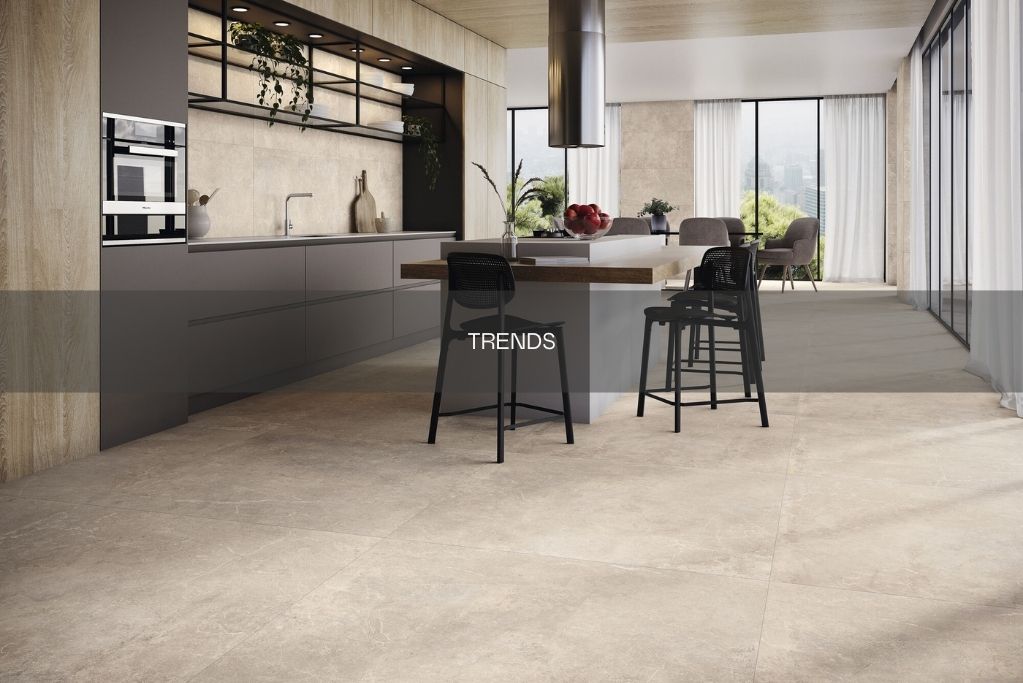
The trend of removing walls between the kitchen, dining room, and living room is not just a matter of style—it reflects how we live today: open spaces that encourage togetherness and make daily life easier. However, this openness needs a foundation that unifies the space without sacrificing personality. Ceramic becomes the perfect ally to create continuity—without monotony or rigidity.
Open kitchens have been gaining ground for years, but in 2026 this concept goes much further: it’s no longer just about knocking down walls, but about thinking of the home as a single, multifunctional space where you can move freely and without interruptions.
But this openness can lose its meaning if you don’t consider how to connect these areas so they function as a cohesive whole, without one space overpowering the others.
Modern ceramic not only provides a coherent aesthetic throughout the home but also meets the specific demands of each area. Advances in manufacturing allow the same tile to withstand the heavy use of a kitchen, the humidity of a dining area near the outdoors, or the daily traffic of a living room—maintaining its impeccable appearance over the years.
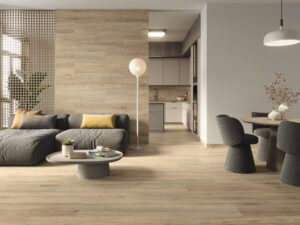
Porcelain tiles with finishes that mimic wood or natural stone provide the perfect balance, ideal for areas that share the same surface. These textures create a visual foundation that feels warm and inviting.
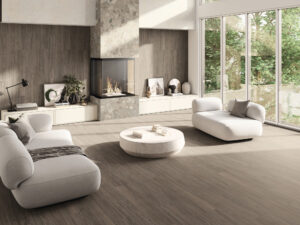
Collections like Amalfi exemplify this trend, offering a palette of neutral and earthy tones that visually unify the space.
Large-format tiles minimize grout lines, reinforcing the sense of continuity while also simplifying daily maintenance. This quality is especially valuable in kitchen and dining areas, where cleanliness is key.
Additionally, ceramic wall or skirting tiles can play a decisive role in adding personality and dynamism without disrupting the overall flow of the space.
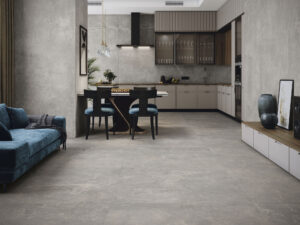
Integrating the kitchen, living room, and dining room is a commitment to flexibility and comfort, without sacrificing style or practicality.
Baldocer ceramics not only facilitate this spatial connection but also add value to the design with materials that age gracefully and spaces that feel thoughtfully curated.